

Pondicherry’s French Quarter, popularly known as White Town, is one of the most beautiful and atmospheric parts of the city. With its mustard-yellow colonial buildings, colourful doors, bougainvillea-covered walls, tree-lined streets and French-style architecture, the neighbourhood feels distinctly different from the rest of Pondicherry.
Here are some of the most beautiful places to see in the French Quarter of Pondicherry.
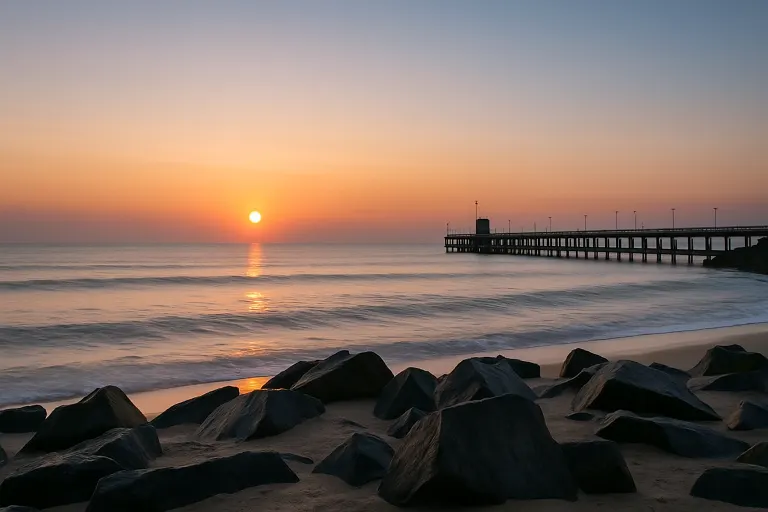
Best for: Sea views, sunrise, sunset, photography and leisurely walks
No visit to the French Quarter is complete without walking along Goubert Avenue, Pondicherry’s famous seafront promenade.
The waterfront stretches along the Bay of Bengal and is one of the city’s most recognisable landmarks. The road is lined with historic monuments and buildings, making it possible to combine a seaside walk with a heritage tour.
Along the promenade, you can see the Mahatma Gandhi Statue, French War Memorial, Old Lighthouse, Nehru Statue and other historic landmarks. The French Quarter’s distinctive architecture provides a beautiful backdrop to the seafront.
The promenade is particularly enjoyable during the early morning and evening when the weather is cooler.
Don’t miss: Sunrise, the Gandhi Statue, evening sea breeze and the illuminated waterfront.

Best for: Spirituality, meditation, history and quiet surroundings
Located in the heart of the French Quarter, Sri Aurobindo Ashram is one of Pondicherry’s most important landmarks.
Founded around the spiritual work of Sri Aurobindo and The Mother, the Ashram attracts visitors from India and around the world. The main Ashram building houses the Samadhi, where visitors can sit quietly for meditation and reflection.
The Ashram’s official visitor hours currently allow the general public to visit the main building from 8:00 AM to 11:30 AM and 2:00 PM to 6:00 PM. Certain other areas require a visitor pass.
The Ashram also maintains a Bureau Central information centre with exhibitions introducing visitors to Sri Aurobindo, The Mother and the Ashram’s philosophy.
Visitor tip: Maintain silence and dress respectfully. Photography restrictions may apply inside Ashram premises.
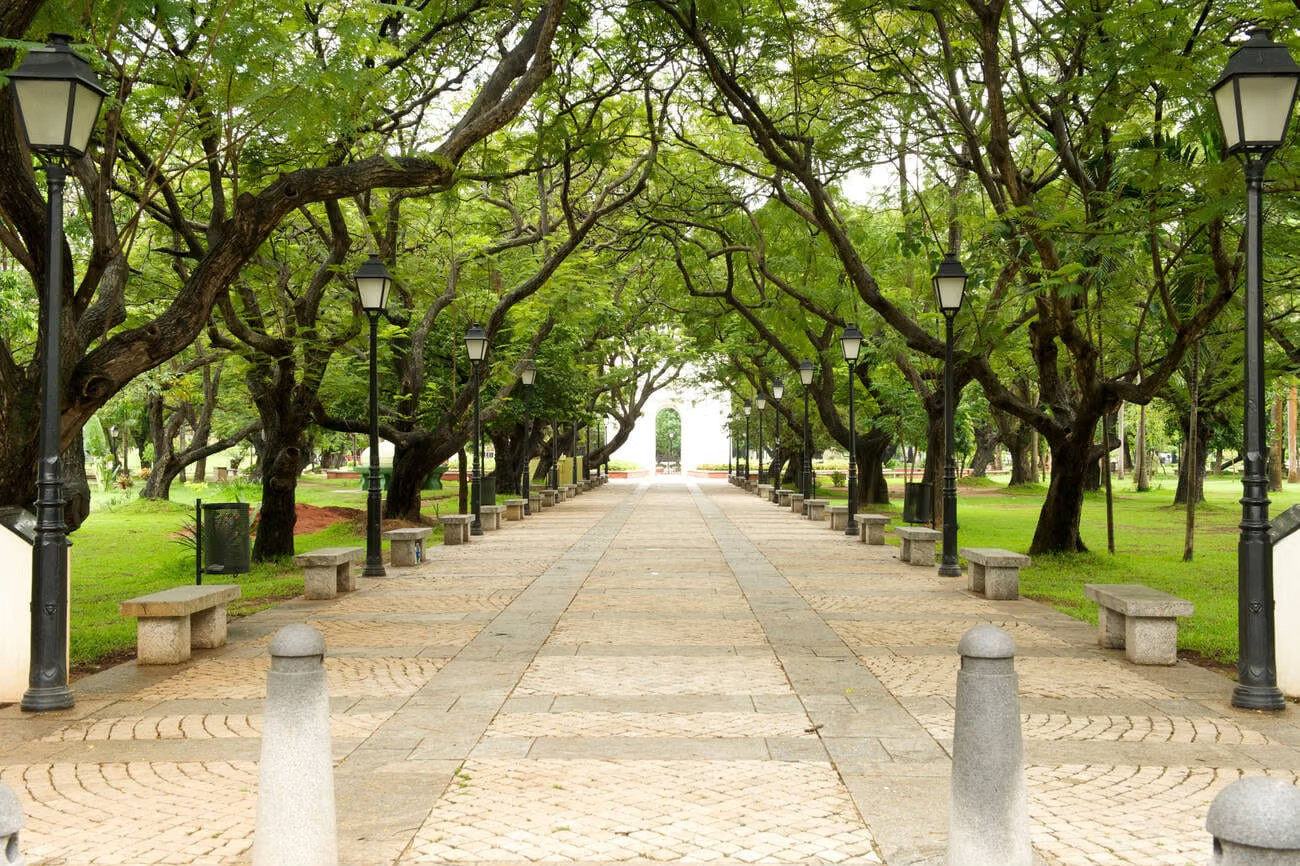

Best for: Architecture, greenery, family walks and photography
At the centre of the French Quarter is Bharathi Park, a pleasant green space surrounded by some of Pondicherry’s most important historic buildings.
At its centre stands the elegant Aayi Mandapam, a white neoclassical monument that has become one of the visual symbols of Pondicherry.
The park occupies an area that played an important role in the historical development of the French settlement. According to the Puducherry Public Works Department, the area was originally associated with the French settlement’s fort and later became a parade ground and government square.
The park is particularly attractive when viewed together with the surrounding colonial buildings.
Don’t miss: Aayi Mandapam, the surrounding heritage buildings and the tree-lined paths.
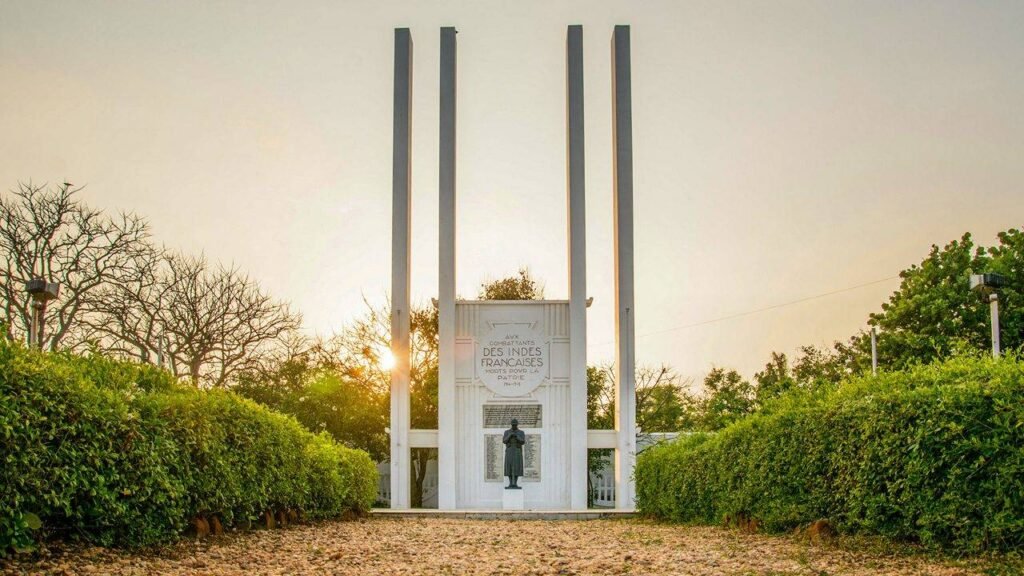
Best for: History, photography and the waterfront
Standing on Goubert Avenue, the French War Memorial is one of the most recognisable monuments in the French Quarter.
The memorial commemorates soldiers from French India who lost their lives during the First World War. It is especially striking because of its simple white architecture and its position directly beside the sea.
The memorial is also one of the most photographed spots along the promenade.
The Puducherry Tourism heritage listings identify the French War Memorial as one of the important landmarks along the waterfront.
Best time to visit: Early morning or late afternoon, when the light is softer and the waterfront is more comfortable.
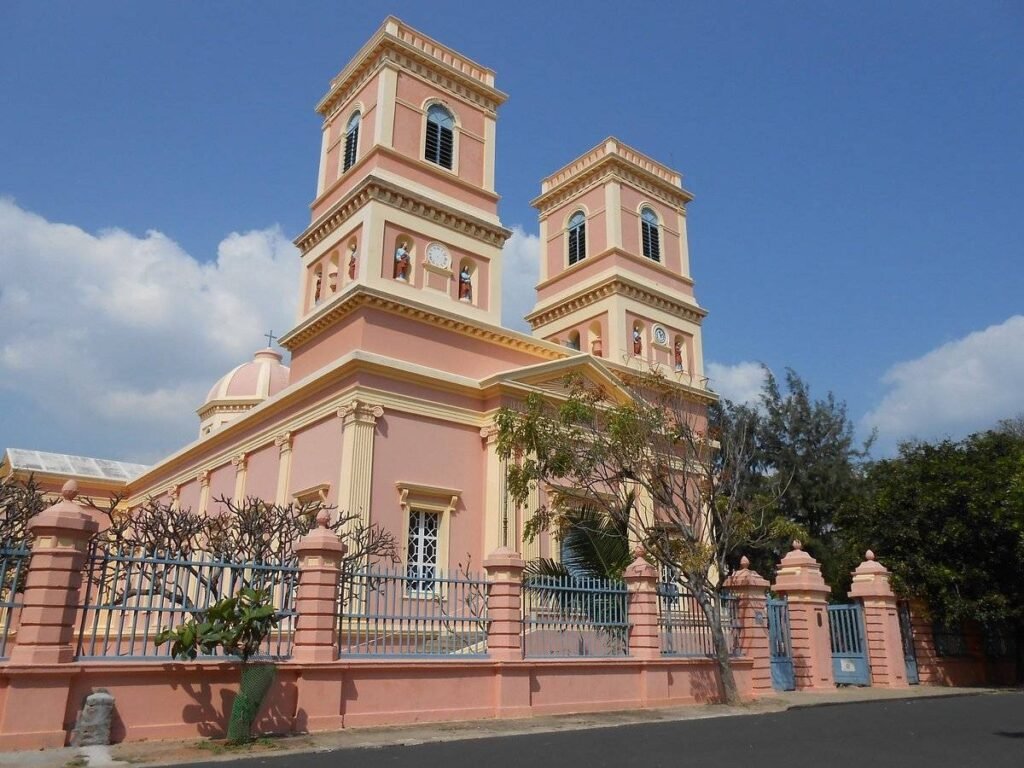
Best for: French architecture, photography and peaceful interiors
The Church of Our Lady of Angels, or Notre Dame des Anges, is one of the prettiest churches in White Town.
Built in the 19th century, the church is known for its elegant Greco-Roman architectural influences and pale façade. Its location near the waterfront makes it easy to combine with a Promenade walk.
The Puducherry Tourism heritage walk specifically identifies Notre Dame des Anges as a French-era church built in 1855.
The church is a particularly good stop for travellers interested in Pondicherry’s religious and architectural heritage.
Photography tip: The exterior is especially attractive in the morning light.
Best for: History, archaeology, French heritage and culture
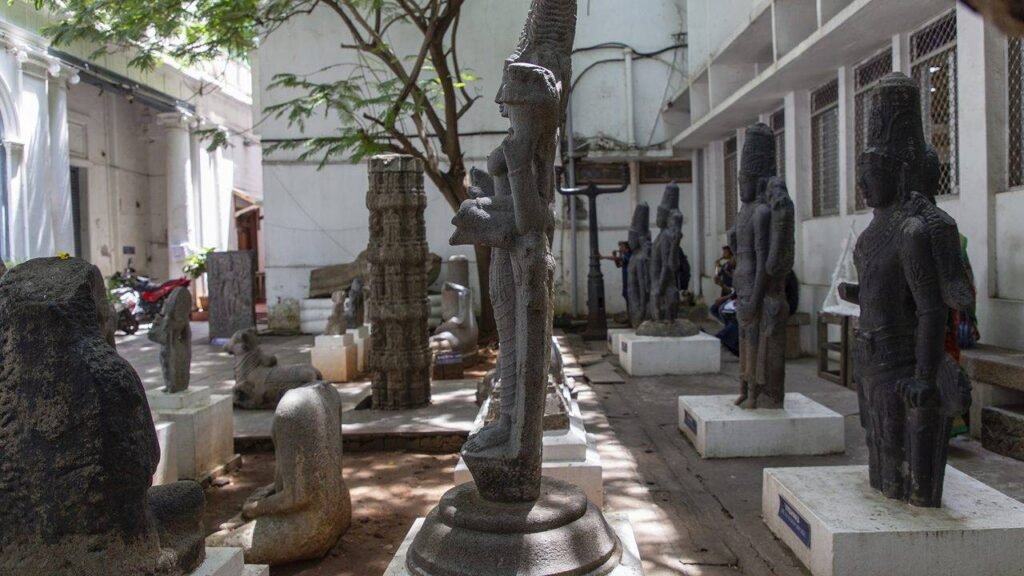
For visitors who want to understand Pondicherry beyond its pretty streets, the Puducherry Museum is an essential stop.
The museum occupies a historic building and presents collections connected with the geological, archaeological and historical development of Puducherry. Its exhibits also explore the region’s arts, crafts and French-period heritage.
One particularly interesting section is the French India Gallery, which recreates aspects of French-period office interiors and displays objects connected with the colonial administration.
The museum is currently listed by the Government of Puducherry as being open Tuesday to Sunday, with a Monday weekly holiday.
Allow: Around 1–2 hours.
7. Raj Nivas
Best for: Colonial architecture and heritage sightseeing
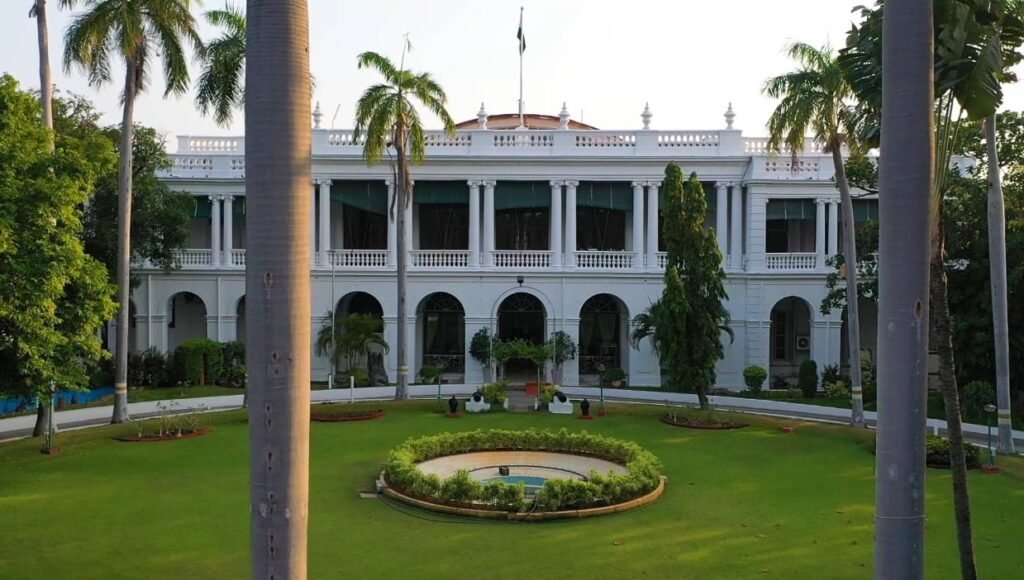
Facing Bharathi Park is Raj Nivas, one of the most important historic government buildings in Pondicherry.
The building has a long connection with the French administration and today serves as the official residence of the Lieutenant Governor of Puducherry.
Although visitors cannot simply enter and explore the building like a museum, its exterior and surrounding heritage setting make it an important part of a French Quarter walking tour.
The Puducherry Tourism heritage walk includes Raj Nivas among the major historic buildings around Bharathi Park.
Tip: View it together with Aayi Mandapam and the surrounding government buildings rather than treating it as a standalone attraction
Best for: Religious heritage and Indo-European architecture
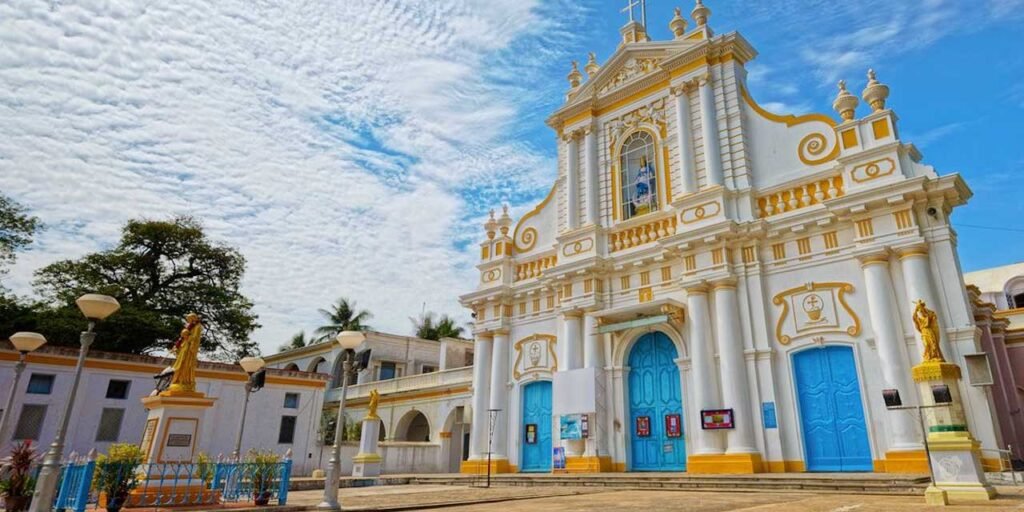
The Immaculate Conception Cathedral, locally known as Samba Kovil, is one of the oldest and most significant churches in Pondicherry.
The cathedral combines European architectural influences with a distinctive white-and-blue exterior accented with gold. It is the mother church of the Roman Catholic Archdiocese of Pondicherry and Cuddalore.
The cathedral’s official website describes it as a roughly 300-year-old church, with the present structure representing a long history of rebuilding and religious activity in Pondicherry.
The cathedral is currently listed as open in the morning and afternoon/evening, although visitors should check the church’s official schedule before planning around Mass timings.
Best for: Architecture lovers, photographers and visitors interested in Pondicherry’s Christian heritage.
Best for: History, photography and coastal views
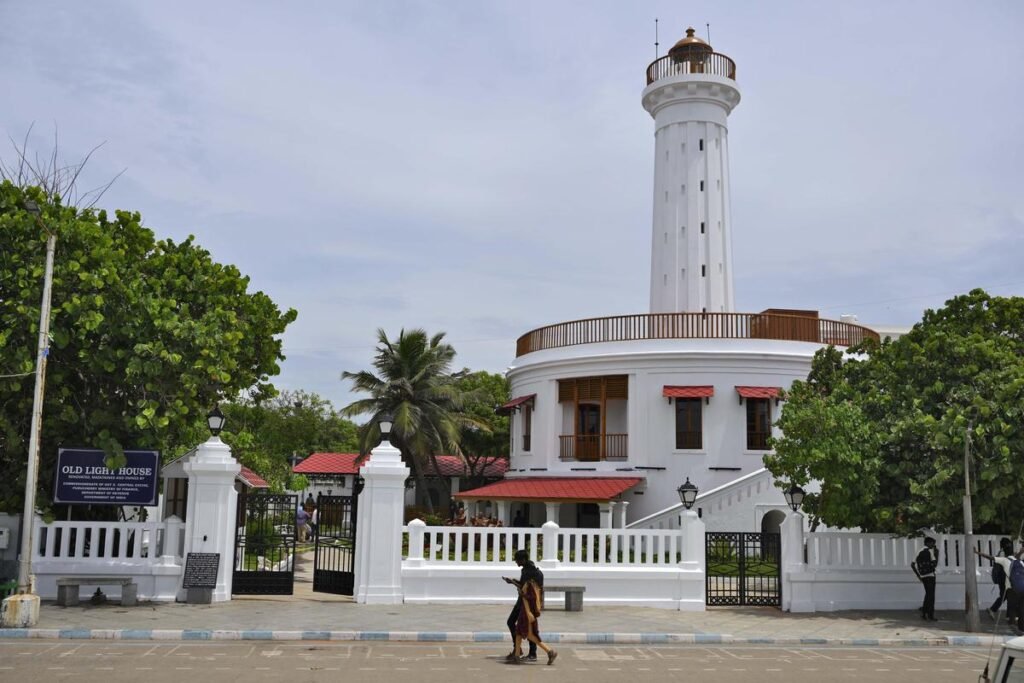
The Old Lighthouse on Goubert Avenue is another iconic landmark of the French Quarter.
Built in 1836, it served as an important navigational landmark for ships approaching Pondicherry.
Today, the lighthouse adds historic character to the promenade and is one of the easiest landmarks to include in a White Town walking tour.
Its location also makes it convenient to combine with the Gandhi Statue, French War Memorial and other waterfront attractions.
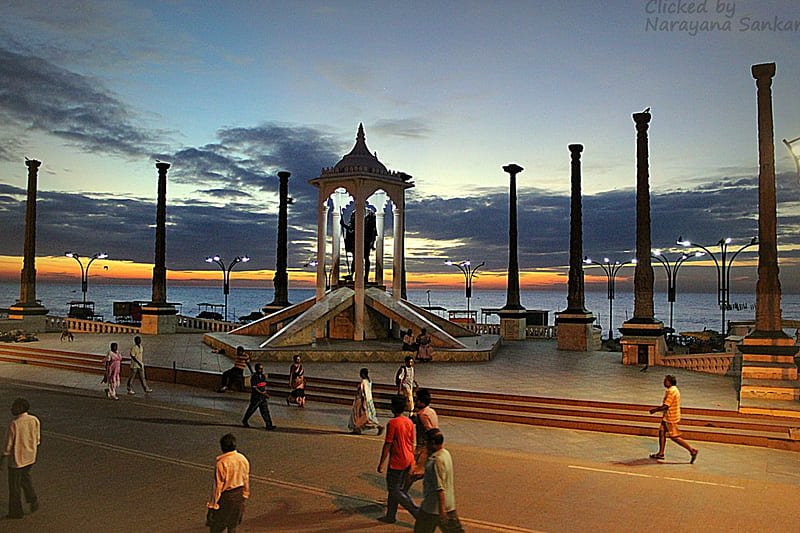
Best for: Photography and waterfront sightseeing
The imposing Mahatma Gandhi Statue is one of the most recognisable monuments on the Pondicherry waterfront.
The statue stands on the promenade and is surrounded by stone pillars, creating an impressive setting against the sea.
It is located close to several other French Quarter attractions, making it an easy stop during a walk along Goubert Avenue.
Best time to visit: Early morning or around sunset.
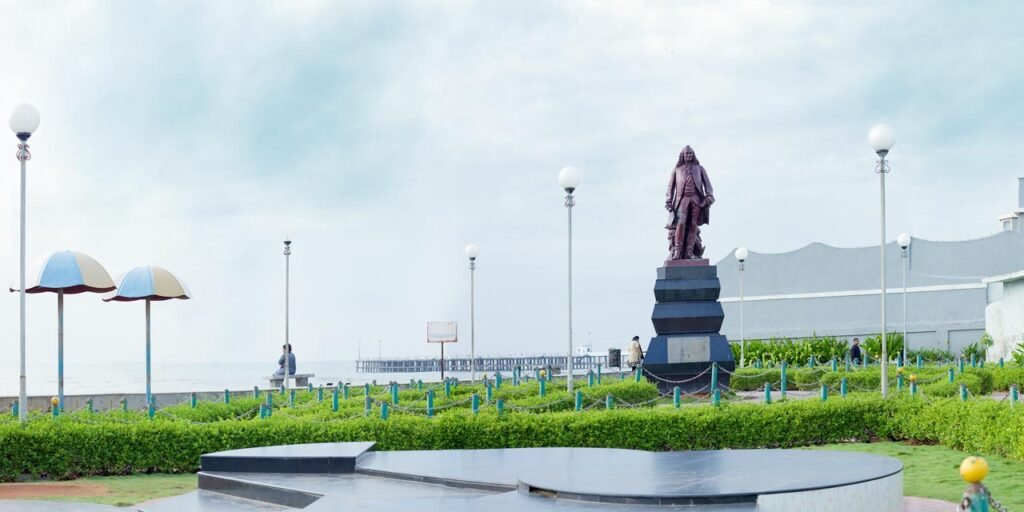
Best for: Colonial history and photography
Located near the promenade, the Dupleix Statue commemorates Joseph François Dupleix, the famous French governor associated with Pondicherry’s colonial history.
The statue provides an opportunity to explore the French political history of the city while walking between the waterfront and the historic streets of White Town.
The monument is included among the French Quarter’s heritage attractions in Puducherry’s tourism listings.
12. Rue Romain Rolland
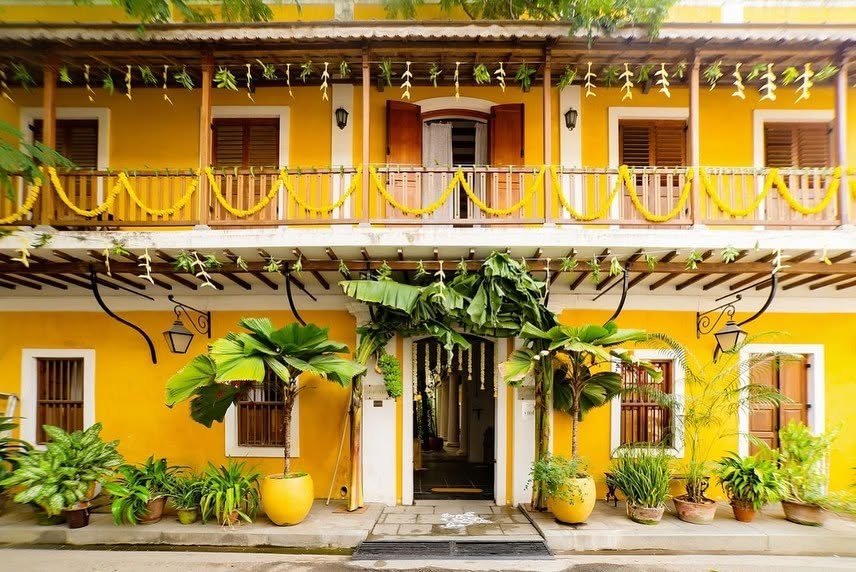
Best for: Heritage architecture, photography, cafés and boutique shopping
If you want to experience the visual character of White Town, don’t simply visit its monuments. Walk through its streets.
Rue Romain Rolland is one of the streets where the French Quarter’s architectural character becomes particularly apparent.
Look for:
- Yellow and pastel colonial façades
- Wooden and coloured shutters
- Arched windows
- Tall compound walls
- Bougainvillea
- French-style street names
- Heritage homes
- Boutique hotels
- Cafés and restaurants
The best photographs often come from simply wandering rather than searching for a particular landmark.
Tip: Walk slowly and explore the smaller lanes branching away from the main streets.
13. Rue Dumas
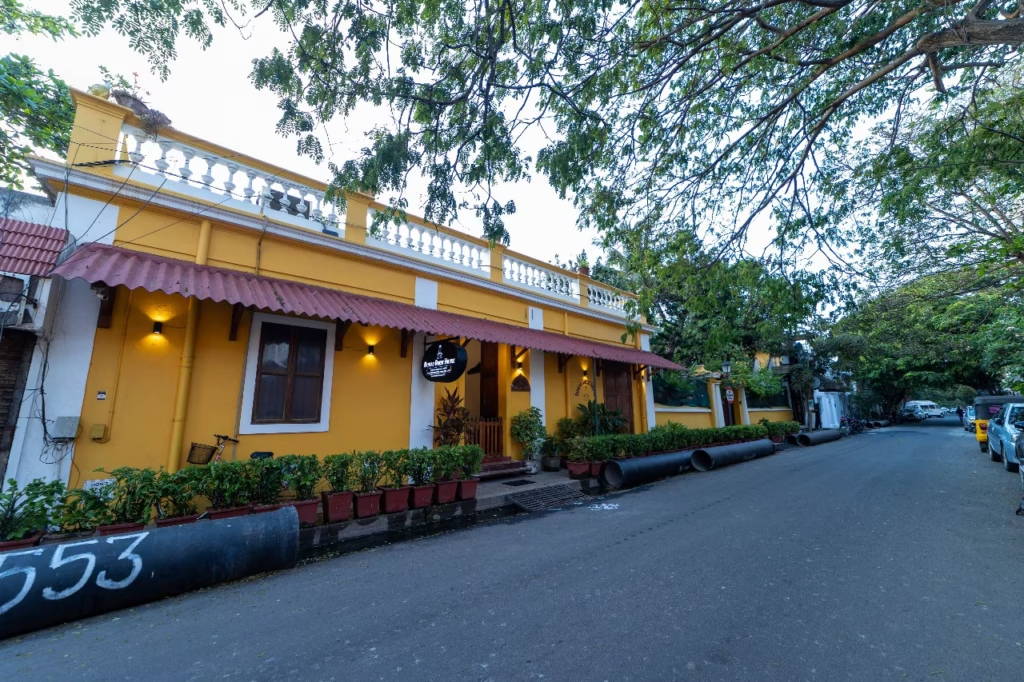
Best for: Cafés, restaurants, boutiques and heritage streets
Rue Dumas is another atmospheric street in White Town.
This area combines the visual charm of colonial Pondicherry with the modern café and restaurant culture that has developed in the French Quarter.
It is a good place to stop for breakfast, coffee or lunch after visiting the nearby heritage attractions.
For travellers interested in the lifestyle side of White Town, Rue Dumas is just as enjoyable as the formal monuments.
14. French Institute of Pondicherry
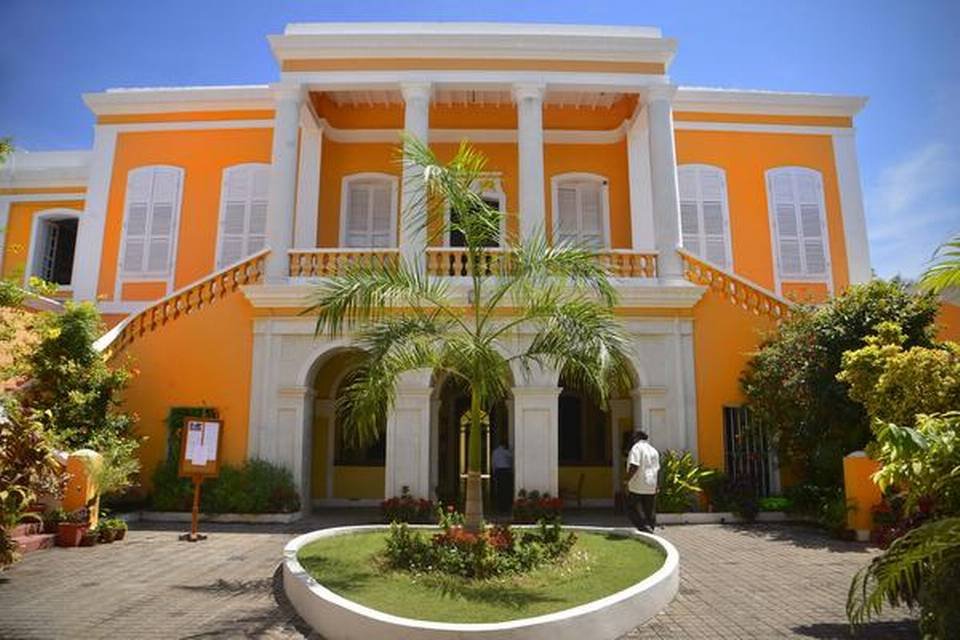
Best for: Architecture, culture, research and heritage
The French Institute of Pondicherry is an important cultural and research institution located within the historic French Quarter.
It represents the continuing intellectual and cultural relationship between France and Pondicherry.
The building and surrounding streets are worth seeing during a heritage walk, particularly for visitors interested in architecture, history, Indology and French-Indian cultural connections.
Puducherry Tourism’s official heritage-walk information includes the French Institute among the notable buildings of the French Quarter.
15. Alliance Française de Pondichéry
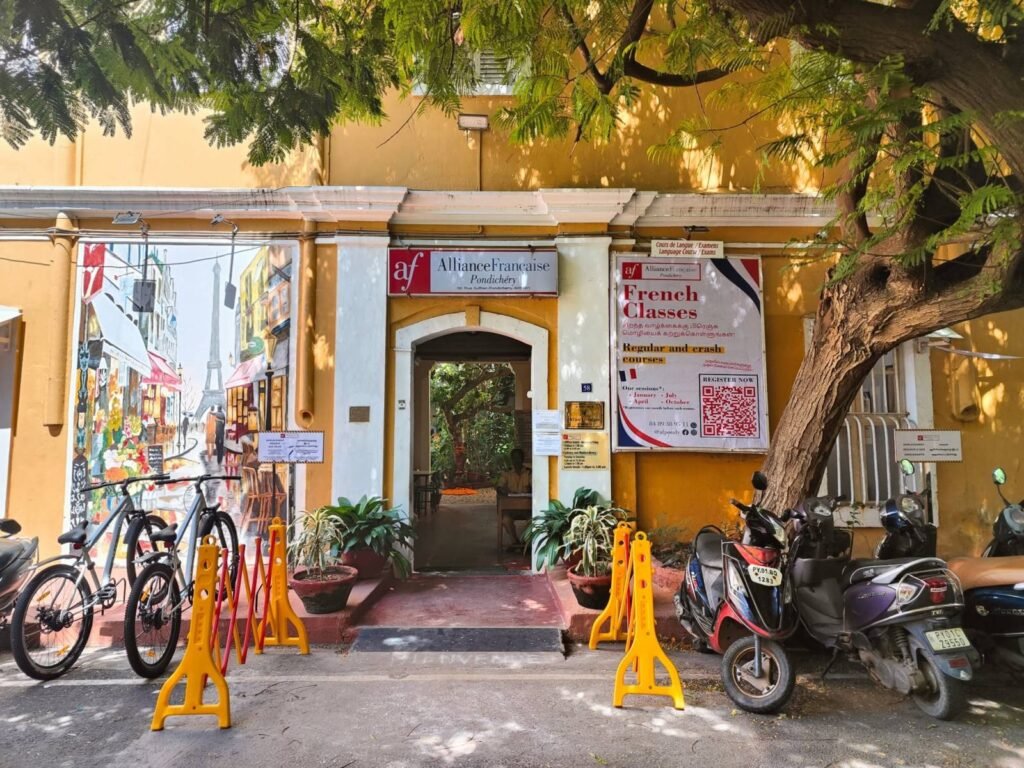
Best for: French culture, language, films and cultural events
The Alliance Française de Pondichéry represents another important part of the city’s continuing French cultural identity.
It is associated with French language learning, cultural programmes, cinema and other activities.
Even if you are not attending a programme, it can be included as part of a broader cultural and architectural exploration of White Town.
Best Time to Explore the French Quarter
The most comfortable period for exploring Pondicherry’s French Quarter is generally October to March, when temperatures are more suitable for walking.
For the best experience during any season:
6:00 AM – 9:00 AM
Best for photography, walking and the promenade.
9:00 AM – 12:00 PM
Good for museums, churches and heritage attractions.
4:00 PM – 7:00 PM
Ideal for cafés, architecture, shopping and the waterfront.
After sunset
Great for seeing White Town’s streets, restaurants and illuminated heritage buildings.
How Much Time Do You Need?
2–3 Hours
Enough for a quick heritage walk covering Bharathi Park, the Ashram area, a few colonial streets and the Promenade.
Half Day
Ideal for first-time visitors. You can combine heritage attractions, churches, the museum, cafés and the waterfront.
Full Day
Best if you want to explore slowly, visit the museum, spend time at the Ashram, photograph the streets, enjoy a long lunch and experience the Promenade at sunset.