
Sign In

Rue Suffren, Pondicherry: A Heritage Walk Through White Town

Culture & Heritage in Pondicherry

Table of Contents

Rue Suffren, Pondicherry: A Heritage Walk Through the Heart of White Town

Rue Suffren is one of the most atmospheric streets in Pondicherry’s historic French Quarter, commonly known as White Town. Running through the heart of the colonial-era neighbourhood, the street brings together heritage architecture, French cultural influences, cafés, boutique hotels, restaurants and everyday Pondicherry life.

Unlike a conventional tourist attraction, Rue Suffren is best experienced as a walking street. Its charm lies in the details: colourful colonial façades, tall wooden shutters, arched entrances, balconies, bougainvillea-covered walls and quiet residential lanes.

The French Quarter itself was developed on a planned grid, and Rue Suffren is one of the historic streets that still reflects that urban character today

Rue Suffren pondicherryWhere is Rue Suffren?

Rue Suffren is located in White Town, Pondicherry, between the historic streets of the French Quarter and within easy walking distance of the seafront.

The area is particularly convenient for visitors because several major attractions can be combined into one walking route. From Rue Suffren, you can explore nearby heritage streets, cafés, cultural institutions and the Promenade before continuing towards other parts of central Pondicherry.

 

Pierre André de Suffren Who was Suffren?

The street is named after Pierre André de Suffren de Saint Tropez, the French naval commander whose career was associated with the Indian Ocean and the southern Indian coast during the eighteenth century. The name is part of the French-era street vocabulary that remains visible across central Pondicherry, alongside Rue Dumas and Rue Romain Rolland.

The Architecture of Rue Suffren

The biggest attraction of Rue Suffren is arguably the street itself.

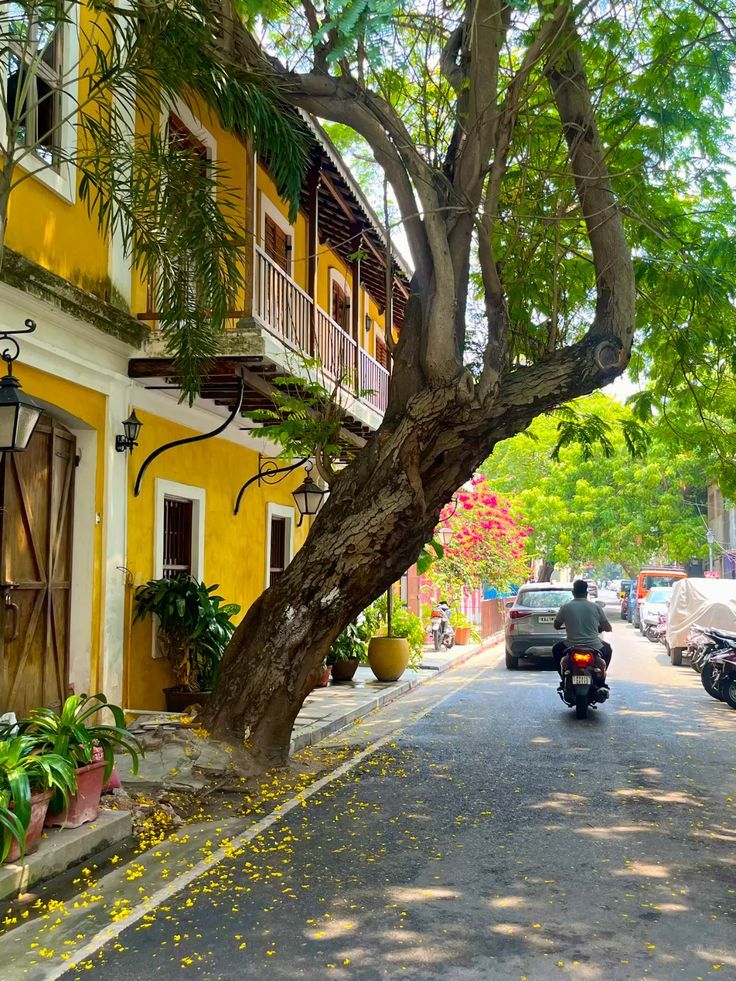
Walk slowly and you’ll notice a distinctive architectural vocabulary characteristic of Pondicherry’s French Quarter:

  • Tall colonial façades
  • Large wooden shutters
  • Arched doorways and windows
  • Wrought-iron details
  • High compound walls
  • Verandas and shaded courtyards
  • Bright yellow, cream and pastel façades
  • Bougainvillea spilling over heritage walls
  • A mixture of French and Indian architectural traditions

The French Quarter developed through a combination of European planning and local building traditions. Large courtyards, verandas and shaded spaces helped adapt the architecture to Pondicherry’s tropical climate. Incredible India

This combination is what makes Rue Suffren particularly photogenic. It doesn’t feel like a recreated colonial attraction; it is an urban neighbourhood where historic buildings continue to sit alongside cafés, homes, offices and modern businesses.

Rue Suffren and Pondicherry’s French Quarter

Rue Suffren makes more sense when explored as part of the larger White Town heritage district.

The French Quarter contains a network of streets with historic French names, many of which are worth exploring on foot. Rue Dumas, Rue Romain Rolland, Rue de la Marine and Rue La Bourdonnais are all part of the same broader heritage experience. Pondy Guide

The Government of Puducherry’s heritage listings also identify important heritage properties on Rue Suffren, including the Alliance Française building at 58 Rue Suffren. PPA
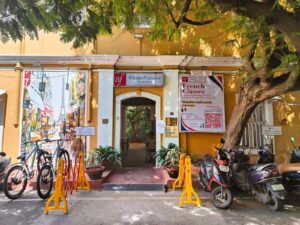
Alliance Française de PondichéryAlliance Française de Pondichéry

One of the notable cultural institutions on Rue Suffren is Alliance Française de Pondichéry.

The Alliance Française is an important part of Pondicherry’s continuing connection with French language and culture. Its presence also demonstrates how the French Quarter has evolved beyond its colonial past into an active cultural neighbourhood.

Rather than being simply a collection of preserved buildings, White Town continues to host cultural, educational and artistic activities.

Cafés, restaurants and places to stay

Today the street and its immediate surroundings are part of White Town’s hospitality scene. Several businesses operate from heritage-style buildings, giving visitors the opportunity to pair a walk with a meal, coffee or an overnight stay. Here are Xplore Pondy listing pages for businesses associated with Rue Suffren:

Check each listing for current details, opening hours and contact information before visiting, as business information can change.

A Street for Photography

If you’re interested in photography, Rue Suffren is one of the streets worth adding to your Pondicherry itinerary.

The most interesting photographs aren’t necessarily of a particular monument. Instead, look for combinations of:

yellow walls + colourful doors + wooden shutters + bougainvillea + bicycles + colonial balconies.

Early morning is particularly pleasant for photography because the streets are generally quieter and the softer light works well against the warm-toned façades.

Late afternoon is another good time to walk, particularly if you want to continue towards the seafront around sunset.

What to See Near Rue Suffren

Rue Suffren is well positioned for exploring several of White Town’s major attractions.

Promenade Beach

Head east towards the waterfront and you’ll reach Promenade Beach and Goubert Avenue, one of Pondicherry’s most recognisable public spaces.

The seafront is ideal for a morning or evening walk and provides a completely different atmosphere from the quieter interior streets of White Town.

French War Memorial

The French War Memorial stands along the waterfront and commemorates soldiers from French India who died during the First World War. It is one of the most recognisable historic monuments in the French Quarter. Incredible India

Notre Dame des Anges

The Church of Our Lady of Angels, commonly known as Notre Dame des Anges, is another important heritage landmark nearby. Its French architectural character makes it a natural addition to a Rue Suffren walking route.

Bharathi Park

Bharathi Park provides a green break from the surrounding streets and is centred around the elegant Aayi Mandapam. It sits close enough to the French Quarter’s principal streets to include in a walking itinerary.

Sri Aurobindo Ashram

The Sri Aurobindo Ashram is another major attraction in the wider White Town area. It adds a spiritual dimension to the neighbourhood, showing that Pondicherry’s identity extends well beyond its French colonial heritage.

Best Way to Explore Rue Suffren

The best way to experience Rue Suffren is on foot.

Don’t rush from one landmark to another. Instead, use Rue Suffren as part of a broader White Town walking route.

A simple route could be:

Rue Suffren → Rue Romain Rolland → Rue Dumas → Notre Dame des Anges → Promenade → French War Memorial → Bharathi Park

This allows you to experience architecture, cafés, cultural landmarks and the waterfront within the same outing.

The French Quarter’s compact street network makes walking particularly suitable for exploring the area.

When Is the Best Time to Visit?

Early morning: Best for quiet streets, photography and a relaxed heritage walk.

Late afternoon: Good for exploring cafés and architecture before continuing towards the waterfront.

Evening: The area becomes livelier as restaurants and cafés fill up, making it a good choice if you’re looking for food and nightlife after sightseeing.

Because Rue Suffren is a functioning urban street rather than a gated attraction, there isn’t a single entrance or ticket required to experience the street itself.

Rue Suffren: More Than a Colonial Street

What makes Rue Suffren interesting is the way different layers of Pondicherry coexist.

There is the French colonial history, visible in the street names and architecture. There is the Indian influence, evident in the climate-responsive architecture and surrounding culture. And there is modern Pondicherry, represented by cafés, restaurants, boutique hotels, cultural institutions and creative spaces.

That combination is what gives Rue Suffren its character.

It isn’t simply a street to photograph and leave behind. It is one of the places where you can see how Pondicherry’s past continues to shape its present.

Rue Suffren at a Glance

DetailInformation
LocationWhite Town, Pondicherry
Known asRue Suffren / Suffren Street
NeighbourhoodFrench Quarter
Named afterVice-Admiral Pierre André de Suffren
Best forHeritage walks, architecture, photography, cafés
Recommended time1–2 hours as part of a White Town walk
Best timeEarly morning or late afternoon
NearbyPromenade, French War Memorial, Bharathi Park, Notre Dame des Anges, Sri Aurobindo Ashram
EntryNo ticket required to walk along the street

Xplore Pondy Tip

Don’t visit Rue Suffren as a single-point attraction. Add it to a White Town walking tour. Start in the quieter streets in the morning, stop for coffee or breakfast, explore the surrounding heritage buildings, and finish your walk at the Promenade around sunset.

That way, Rue Suffren becomes part of the larger Pondicherry experience rather than just another location on your checklist.

Explore more Pondicherry heritage places on Xplore Pondy


Recent Guide Articles